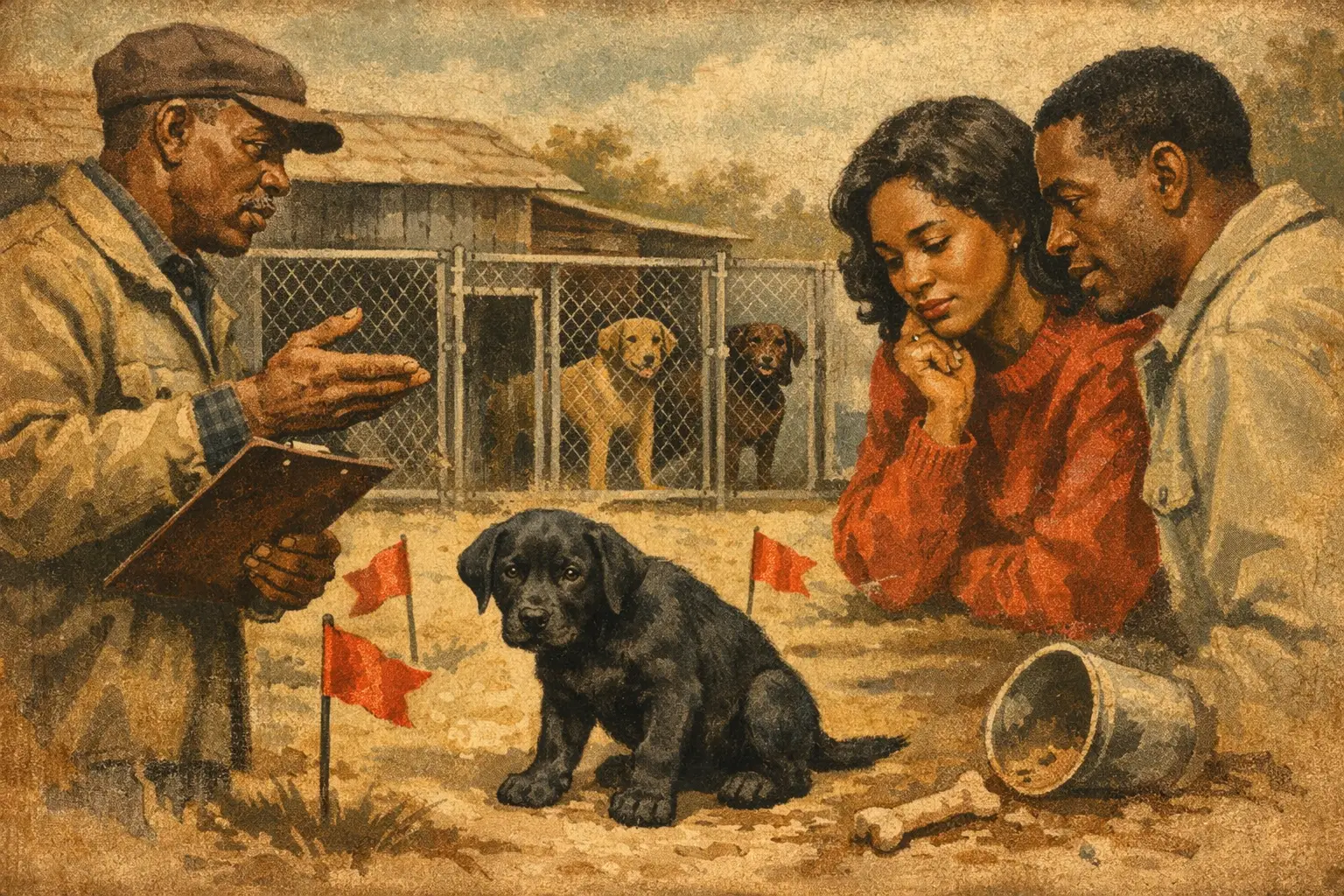

A Labrador puppy can look healthy, affectionate, and absolutely irresistible in a photo. That is why Labrador breeder red flags are easy to miss when you have already pictured that puppy sleeping at your feet, joining family adventures, or becoming the steady companion you need. A responsible decision starts before a deposit is sent. It starts with asking what stands behind the puppy: the breeding program, the health history, the early care, and the breeder’s willingness to remain accountable.
A well-bred Labrador should be more than a beautiful color or a sweet face. Families and working-dog homes deserve a dog with the strongest possible foundation for health, sound temperament, trainability, and lifelong support. No breeder can promise that a dog will never face a health or behavior challenge, but responsible breeders do the work that reduces avoidable risk and tells you the truth about what they breed.
Labrador Breeder Red Flags Worth Taking Seriously
The biggest warning signs are rarely one dramatic moment. More often, they are a pattern of vague answers, rushed decisions, missing records, and a breeder who seems more focused on moving puppies than matching them thoughtfully with homes.
1. Health testing is promised but never documented
A breeder saying, “Our dogs are healthy” is not the same as providing proof of health testing. Labrador Retrievers can be affected by inherited concerns involving hips, elbows, eyes, heart health, and genetic conditions. Responsible breeders should be prepared to explain what testing was completed on the parents and, ideally, the health information behind prior generations as well.
Be cautious if records are unavailable, if the breeder dismisses testing as unnecessary because their dogs have “never had problems,” or if they use a basic veterinary exam as a substitute for breed-appropriate screening. A vet check is valuable, but it does not replace genetic testing or orthopedic and eye evaluations where appropriate.
Health testing is not a magic shield. Even carefully bred dogs can develop medical issues. What it shows is that a breeder takes informed, preventative decisions seriously rather than relying on luck.
2. You cannot meet the mother or see where puppies are raised
There are reasonable exceptions. A stud dog may live elsewhere, and a breeder may limit in-person visits during a very young puppy’s vulnerable period. But you should still be able to learn about both parents and see clear, current evidence of the environment in which the litter is being raised.
The mother dog’s temperament, condition, and relationship with people can reveal a great deal. Is she comfortable and well cared for? Does she appear fearful, overly stressed, or physically depleted? Are the puppies raised in a clean, home-like setting with normal household activity and age-appropriate enrichment?
A breeder who refuses every request to show you the dogs or the puppy area may be hiding overcrowding, poor sanitation, or dogs kept in conditions that do not support healthy development. Trust your instincts, but ask for facts too.
3. The breeder always has puppies available
Having an occasional litter available is not automatically a concern. Timing varies, and responsible breeders sometimes have a puppy whose original placement did not work out. The issue is a constant stream of litters, many breeds, or an endless selection of puppies ready to leave immediately.
Thoughtful breeding requires planning. It includes selecting dogs carefully, allowing mothers time to recover, evaluating offspring, and considering whether there are qualified homes waiting. A breeder producing volume without a clear purpose may be treating puppies as inventory instead of lifelong responsibilities.
This matters even more if you are looking for a Labrador with therapy, service, emotional support, comfort, or advanced training potential. Those roles call for stable nerves, people-focused temperament, sound structure, and early guidance. They cannot be reliably produced through rushed, high-volume breeding.
4. There is pressure to pay quickly
A responsible breeder wants committed homes, but should not make you feel cornered. Be wary of messages claiming that you must send money within minutes, that several unnamed buyers are waiting, or that a discount is available only if you pay today.
Deposits can be a normal part of reserving a puppy. The concern is when payment comes before clear conversations about the litter, the contract, the health information, your home, and the breeder’s placement process. You should understand what the deposit covers, whether it is refundable, and what happens if the breeder cannot provide the puppy as agreed.
The right Labrador may be worth waiting for. A breeder who cares about a successful match will not punish you for taking time to read the agreement, ask questions, or discuss the decision with your household.
5. Every puppy is marketed as perfect for every home
Labradors are famously adaptable, loving dogs, but they are not identical. One puppy may be bold and energetic, another more observant and sensitive. Some homes want an active sporting companion. Others need a calm family dog, while others are looking for a prospect with the right qualities for therapy or support work.
A breeder who says any puppy will fit any family is not paying close attention to temperament. Good breeders observe puppies as they grow and learn about buyers before making recommendations. They may even tell you that a particular litter or puppy is not the best fit. That can be disappointing, but it is also a sign of integrity.
Be equally careful with guaranteed claims. No ethical breeder can guarantee that an eight-week-old puppy will become a service dog or perform a specific job. They can breed and raise puppies with promising traits, then support appropriate training and evaluation as the dog matures.
6. The breeder does not ask you questions
It may feel convenient when someone is willing to sell a puppy with no screening at all. In reality, a no-questions sale should make you pause. Responsible placement protects the puppy as much as it protects the buyer.
Expect questions about your family, children, other pets, activity level, work schedule, housing, training plans, and prior dog experience. If you are seeking a dog for emotional support or a future working role, a breeder should also want to understand your needs and expectations. This is not judgment. It is the beginning of a thoughtful match.
The strongest breeder relationships are two-way conversations. You should be able to ask direct questions, and the breeder should be just as willing to learn whether their puppy will thrive with you.
7. There is no written contract, health guarantee, or return policy
A handshake may feel personal, but a clear written agreement protects everyone when emotions are high and circumstances change. The contract should explain health guarantee terms, buyer responsibilities, spay or neuter expectations if applicable, registration details, and what support the breeder provides after placement.
One of the most meaningful standards is a lifetime return or rehoming commitment. Life changes. Illness, financial hardship, housing problems, or family emergencies can make it impossible to keep a dog. A breeder who truly stands behind every puppy will want the dog returned to them or will help guide safe rehoming rather than allowing the dog to enter an uncertain situation.
Read the contract before placing a deposit. If terms are confusing, overly one-sided, or withheld until pickup day, ask why. A good agreement should be clear enough to discuss openly.
8. Puppies leave too early or without age-appropriate preparation
Very young puppies need time with their mother and littermates. Those early weeks teach social skills, bite inhibition, resilience, and canine communication. A breeder offering puppies at five or six weeks old is putting convenience ahead of development.
Before going home, puppies should also receive appropriate veterinary care for their age, be introduced gradually to everyday sounds and surfaces, and begin positive human handling. Early socialization does not mean overwhelming a puppy with constant activity. It means intentional exposure that builds confidence without creating fear.
Ask what the puppies experience each day. A thoughtful answer might include gentle handling, crate introduction, grooming touch, household sounds, car rides when appropriate, and structured routines. Vague statements about puppies being “well socialized” should be followed by real examples.
9. The breeder avoids hard questions about lineage and breeding choices
Responsible breeders should be able to explain why a particular pairing was chosen. The answer may involve health results, temperament, structure, trainability, pedigree, or the strengths they hope to preserve. They should also be candid about the limitations of any line.
Be cautious when a breeder cannot identify the parents, does not know whether related dogs have been bred closely, or treats questions about lineage as intrusive. Intentional breeding should never be casual. Avoiding inbreeding and line breeding, understanding family health patterns, and selecting dogs for sound character all require careful records and conviction.
Color can be part of a family’s preference, whether you love a chocolate, black, yellow, or silver Labrador. It should never be the only breeding priority. A puppy’s color lasts a lifetime, but so do health, temperament, and the quality of the care behind its first weeks.
What a Responsible Labrador Breeder Looks Like
The absence of red flags is only the starting point. Look for a breeder who welcomes questions, shares health information clearly, raises puppies with care, and screens buyers because each placement matters. Look for someone who talks about the individual dog you need, not simply the puppy they need to sell.
A responsible breeder also recognizes that support does not end at pickup. First-time owners may need help with crate training, feeding transitions, chewing, sleep schedules, and normal puppy behavior. Experienced owners may want guidance on advanced training or whether a dog has the right temperament for a particular role. That ongoing availability is part of responsible stewardship.
Choosing a Labrador is a long-term promise, often lasting a decade or more. Take your time, ask the uncomfortable questions, and choose the breeder who treats that promise with the same care you do.