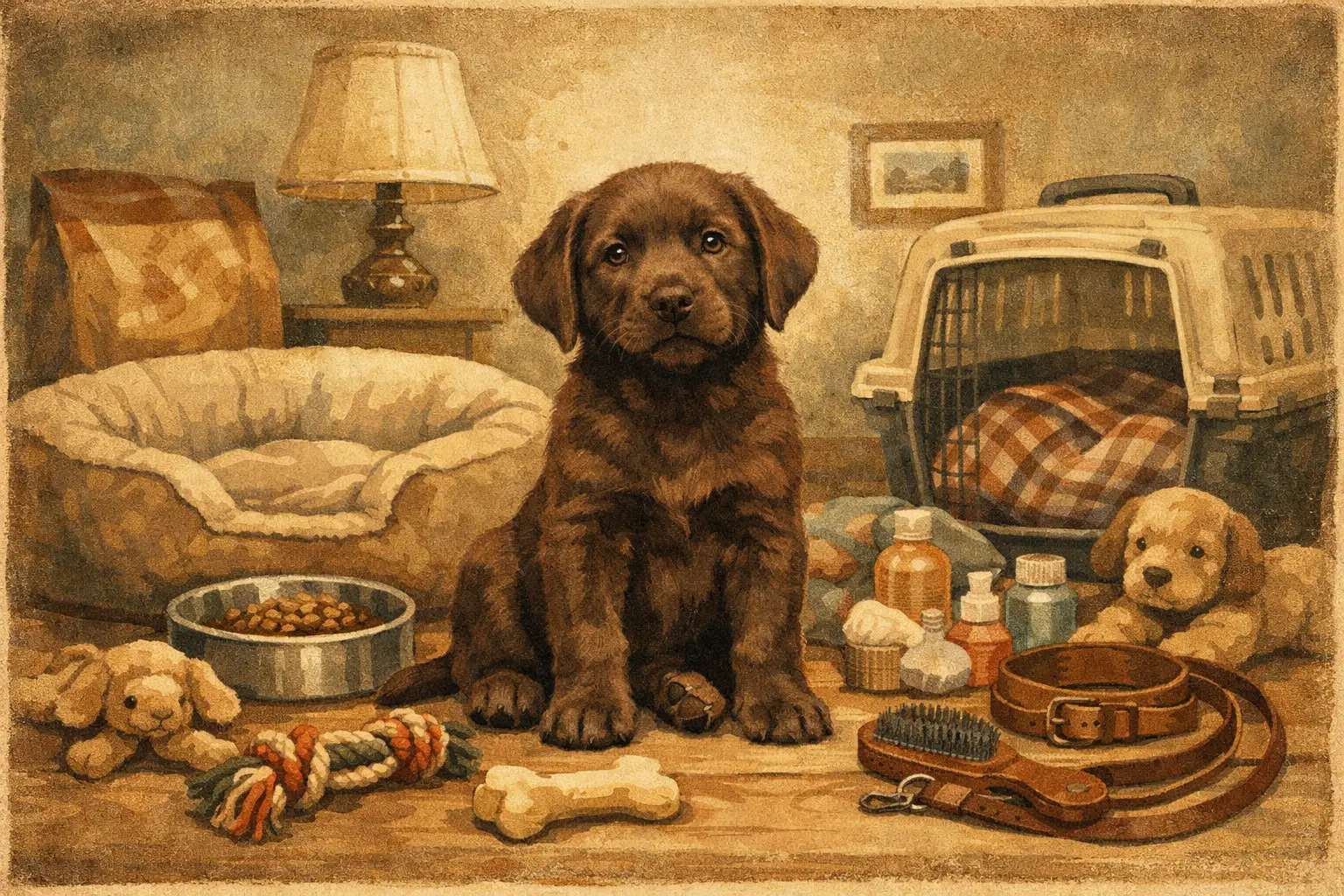
A Labrador puppy can look small on pickup day, but that little dog will quickly become a strong, active, curious family member. Choosing the best supplies for lab puppies before they come home gives everyone a calmer start. The goal is not to buy every puppy gadget on the shelf. It is to create a safe routine that supports house training, healthy growth, good manners, and the close bond your family is looking forward to.
Labradors are people-focused dogs with busy noses, strong jaws, and a natural enthusiasm for food and play. They thrive when their environment is simple, consistent, and thoughtfully prepared. A few quality essentials will serve your puppy far better than a house full of toys they can destroy or unsafe items they can swallow.
Start With a Safe Puppy Space
Your puppy needs a quiet place to rest when the household is busy, when you cannot supervise, and overnight. A properly sized crate is one of the most useful supplies you can bring home. Choose a sturdy wire or hard-sided crate with enough room for your puppy to stand up, turn around, and lie down comfortably. Because a Labrador grows quickly, a full-size crate with a divider is often the more practical investment.
The divider lets you expand the space as your puppy grows. Too much room early on can make house training harder, since some puppies will sleep on one side and use the other as a bathroom. The crate should never be used as punishment. It should feel like a peaceful den where good things happen: meals, a safe chew, naps, and quiet praise.
A washable crate mat or simple bedding is helpful, but use your judgment. Some young puppies chew and shred fabric, while others settle beautifully with a soft blanket. If your puppy mouths or tears bedding, remove it and use the crate without loose materials until they are ready. Safety comes first.
A playpen or baby gates can also protect both your puppy and your home. Labradors do not need freedom in every room right away. Limiting access helps prevent accidents, chewing, and the habit of rehearsing behavior you do not want. It also makes it easier to teach a puppy where to rest, play, and go outside.
Best Supplies for Lab Puppies at Mealtime
A Labrador’s relationship with food can be a powerful training advantage. It can also lead to overeating if meals and treats are not measured carefully. Begin with a high-quality puppy food recommended by your breeder and veterinarian. A sudden food change can cause digestive upset, so if you plan to transition foods, do it gradually over several days.
Buy stainless-steel food and water bowls rather than lightweight plastic bowls. They are easy to sanitize, durable, and less likely to hold odors. A non-slip base is useful for an eager Labrador puppy who may otherwise push the bowl across the kitchen floor.
A measuring cup or kitchen scale is another humble but valuable tool. Labrador puppies grow quickly, and portion sizes should be adjusted based on age, body condition, activity level, and veterinary guidance. Your puppy should have a visible waist and a healthy, athletic shape as they mature. Those soulful Labrador eyes will often ask for more, but feeding decisions should be based on health rather than persuasion.
For puppies that eat too fast, a slow-feeder bowl may help. It is not necessary for every dog, and some puppies find complex feeders frustrating. Start with calm, structured meals and see how your puppy does. Food puzzle toys are best introduced under supervision, especially while your puppy is still learning what is and is not appropriate to chew.
Training Supplies That Build Good Habits Early
The first months matter because puppies are learning every day, whether we are intentionally teaching them or not. Keep training tools straightforward and kind. You will want a lightweight flat collar, an identification tag, a standard six-foot leash, and a well-fitted harness if you prefer one for walks. Avoid retractable leashes for early training. They give a young puppy inconsistent boundaries and can make it difficult to teach polite leash manners.
A long line is useful later for practicing recall in a safe, open area. It gives your puppy room to explore while you retain control. Recall is especially important for Labradors, whose love of people, birds, scents, and water can occasionally outweigh their focus.
Keep small, soft training treats nearby, but do not rely only on treats. Your voice, affection, a tossed toy, and access to something your puppy wants can all become rewards. Labradors are often highly responsive when training is clear and positive. Short sessions of two to five minutes, repeated through the day, are more effective than one long session when a puppy is tired or overstimulated.
A clicker can be helpful for families who enjoy marker training, but it is optional. What matters most is timing. Mark and reward the behavior you want – sitting before greetings, coming when called, settling on a bed, or choosing a toy instead of a table leg.
Chews and Toys Need More Thought Than Quantity
A Labrador puppy explores with their mouth. Chewing is normal, particularly during teething, but it needs an appropriate outlet. Choose durable puppy-safe rubber toys that are large enough that they cannot be swallowed. You can stuff some rubber toys with a portion of your puppy’s regular food and freeze them to offer soothing enrichment during teething.
Do not leave new toys, chews, or edible treats with your puppy unsupervised until you know how they use them. A toy that is safe for one puppy may be quickly damaged by another. Remove any item that breaks into small pieces, develops sharp edges, or becomes small enough to swallow.
Rope toys can be enjoyable for supervised tug and interactive play, but loose fibers can be a concern if your puppy pulls them apart and eats them. Plush toys are a similar trade-off. Some puppies cuddle them gently; others perform surgery on them within minutes. There is no prize for buying the cutest toy if it is not safe for your individual dog.
Grooming and Health Essentials for a Growing Labrador
Labradors have a short coat, but they still shed and benefit from regular grooming. A rubber curry brush or gentle slicker brush will help you introduce handling while keeping loose hair under control. Brief, pleasant brushing sessions also teach your puppy that being touched is normal – a valuable foundation for grooming, veterinary care, and future nail trims.
Keep puppy nail clippers or a nail grinder, dog-safe shampoo, a soft towel, and canine dental supplies on hand. Ask your veterinarian which dental products are suitable for your puppy’s age. Start by making tooth brushing calm and brief. Even a few seconds of positive handling builds cooperation over time.
Your practical home kit should also include an enzymatic cleaner for accidents, waste bags, a pet-safe first-aid kit, and a digital thermometer reserved for your dog. An enzymatic cleaner matters because ordinary cleaners can leave behind scents that encourage a puppy to return to the same indoor spot.
Here are the core items worth having before your Labrador puppy arrives:
- A properly sized crate with a divider and a safe rest area
- Stainless-steel bowls, measured puppy food, and age-appropriate treats
- A flat collar, ID tag, standard leash, and optional fitted harness
- Durable puppy-safe chew toys and supervised enrichment toys
- A brush, nail-care tool, dog-safe shampoo, and dental supplies
- Enzymatic cleaner, waste bags, and a basic pet first-aid kit
What You Can Wait to Buy
New puppy families are often tempted by expensive beds, elaborate outfits, and large collections of toys. Most can wait. A growing Labrador may outgrow a bed, chew through a blanket, or show a completely different toy preference than you expected.
You can also wait on advanced equipment such as a full-size outdoor kennel, specialized sport gear, or complicated electronic training devices. Begin by learning your puppy’s personality, energy level, and needs. A thoughtful routine and consistent guidance are more valuable than a cart full of accessories.
For families bringing home a puppy with future service, therapy, comfort, or emotional support potential, early supplies should still be simple. Focus on safe exposure, excellent manners, rest, positive handling, and structured training. A puppy does not need to be pushed into public settings before they are developmentally ready. Confidence grows through positive experiences at the right pace.
At Lucky Labs, we believe a well-bred Labrador deserves a home prepared for both the joyful puppy stage and the dependable companion they are becoming. Set up the basics, keep your expectations patient, and let each day of feeding, training, play, and rest teach your puppy that they are safe with you.