
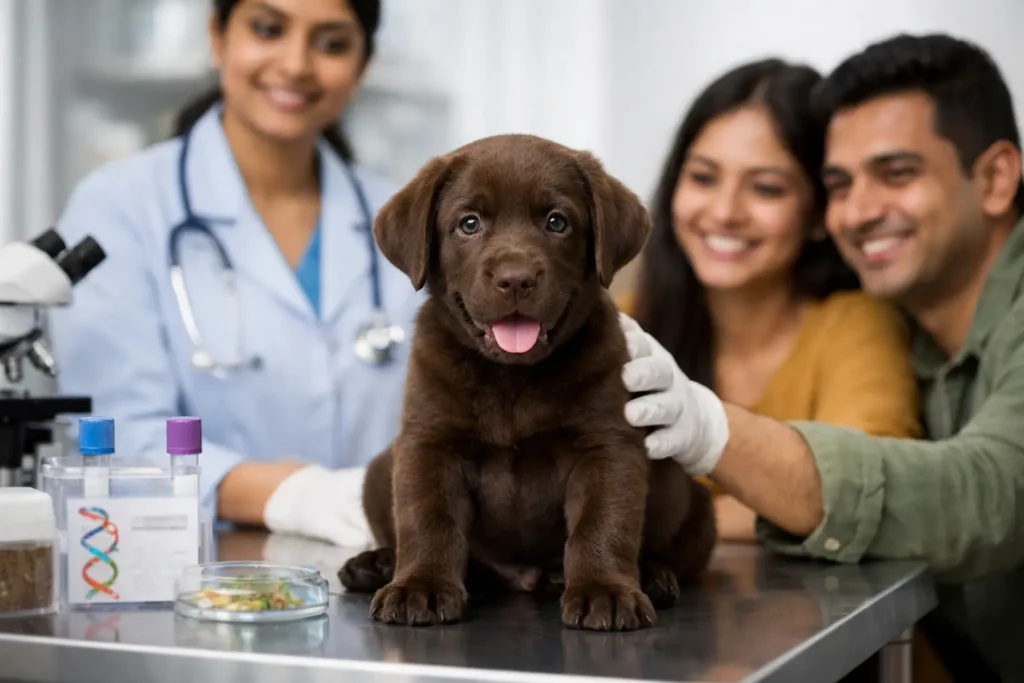
A Labrador puppy should bring anticipation, laughter, and a very full toy basket – not unanswered questions about preventable inherited conditions. Genetic tested Lab puppies give families a clearer picture of the health history behind their new companion before they bring that puppy home.
For a family looking for a steady, affectionate Labrador, or for someone hoping for a dog with therapy, comfort, service, or emotional support potential, that clarity matters. Genetics cannot promise a perfect life. What responsible testing can do is help breeders make informed decisions, reduce avoidable risk, and protect the qualities that make the Labrador Retriever such an exceptional companion.
What Genetic Tested Lab Puppies Really Means
The phrase can sound simple, but it should mean more than a breeder saying, “Our dogs are healthy.” Genetic testing examines a dog’s DNA for specific inherited conditions that can be passed from parents to puppies. The results help a breeder understand whether a dog is clear, a carrier, or affected by a particular genetic variant.
A carrier is not necessarily a sick dog. In many recessive conditions, carriers live normal, healthy lives. The concern arises when two carriers of the same condition are bred together, creating a possibility that some puppies will be affected. A thoughtful breeding program uses test results to avoid those pairings while preserving genetic diversity and strong Labrador traits.
Health testing should also extend beyond a DNA panel. Labrador Retrievers can be evaluated for orthopedic, eye, and heart concerns through appropriate veterinary screenings. A breeder who reviews the health of parents and, when possible, grandparents has a much stronger foundation than one who relies on a quick visual assessment or a single statement that a dog has “good lines.”
At Lucky Labs, this standard includes tested genetics, attention to parent and grandparent health, and a firm commitment to avoiding inbreeding and line breeding. Those decisions are made long before a litter is born, because responsible puppy placement begins with responsible breeding choices.
The Health Questions Testing Can Help Answer
Labradors are known for their friendly nature, athletic ability, and desire to be close to their people. They are also a breed with health considerations that should be taken seriously. DNA testing may screen for inherited conditions seen in Labradors, while orthopedic and specialist evaluations can provide valuable information about the breeding dogs’ hips, elbows, eyes, and cardiac health.
The exact tests that matter can vary by bloodline and by the testing standards used by the breeder. That is why buyers should feel comfortable asking what was tested, which parent was tested, and how the results influenced the pairing. A responsible breeder will welcome those questions. They should be able to explain their process in plain language without making you feel as though you are asking for too much.
Testing is especially meaningful because many inherited concerns are not obvious in a young puppy. A puppy can be playful, bright-eyed, and adorable while still carrying genes that deserve consideration in future breeding decisions. The purpose is not to label puppies as problems. It is to make careful choices that give each litter the best possible start.
There is also a difference between a breeder who tests because it is required for a checklist and one who tests because the dogs’ future matters personally. The first approach may stop at paperwork. The second shapes everything from selecting breeding dogs to placing puppies in homes that fit their energy level, temperament, and needs.
What Genetic Testing Cannot Guarantee
Families deserve honest answers, including the limits of genetic testing. No breeder can guarantee that a puppy will never develop a health issue. Dogs, like people, are influenced by genetics, growth, nutrition, activity, injury, environment, and simple chance.
A clear DNA result does not replace good veterinary care, a balanced diet, sensible exercise, or proper weight management. For a growing Labrador, protecting joints means avoiding too much repetitive impact while the puppy is still developing. It also means resisting the urge to overfeed that sweet, food-motivated face at the kitchen table.
Genetic testing also cannot completely predict personality. It can support a breeding program that values stable, trainable dogs, but individual puppies still have their own temperaments. Early handling, socialization, training, and the home environment all play a major role in who a puppy becomes.
That is not a weakness in the process. It is a reason to choose a breeder who sees puppy placement as a relationship, not a transaction. The best match considers more than color or gender. It considers whether a puppy’s confidence, activity level, and people-focused nature fit the home waiting for them.
Questions Worth Asking a Labrador Breeder
A good breeder should make it easy to understand the health work behind a litter. You do not need to be a genetics expert to have a meaningful conversation. Start by asking whether both parents received genetic testing and what conditions were included. Ask whether hips, elbows, eyes, and heart health were evaluated when appropriate for the dogs’ age and breeding plan.
It is also reasonable to ask how the breeder prevents close breeding. Line breeding is sometimes presented as a way to preserve a desired trait, but it can also concentrate unwanted genes and narrow a program’s genetic diversity. Families seeking a healthy, long-lived companion should understand a breeder’s philosophy, not just receive a one-word answer.
Written health guarantees deserve a close read as well. A guarantee should be clear about what is covered, what records are required, and how the breeder will respond if a serious inherited concern appears. The strongest commitment is not a document alone. It is a breeder who remains available to answer questions and accepts lifelong responsibility for the dogs they place.
Pay attention to how the breeder talks about their puppies after they leave. Do they offer guidance on feeding, training, and the first challenging weeks at home? Do they carefully screen buyers instead of sending any puppy to the first person ready to pay? Are they willing to help if life changes and a dog needs to be rehomed? Those answers say a great deal about the care behind the breeding program.
Health, Temperament, and Training Belong Together
For many families, a Labrador’s temperament is just as important as physical health. A dog intended to live with children, visit hospitals as a therapy dog, provide comfort, or pursue advanced training needs a stable foundation. That foundation begins with carefully selected parents and continues through early experiences.
A well-bred Labrador should not be expected to arrive fully trained, and no ethical breeder should promise that every puppy will become a service or therapy dog. Those roles depend on the individual dog, professional evaluation, training, and the demands of the work. Still, breeding for intelligence, biddability, confidence, and an affectionate nature gives the right puppy a meaningful advantage.
Early training can help families carry that advantage into daily life. Crate comfort, house-training routines, polite greetings, leash skills, and healthy socialization do not happen by accident. For first-time owners, structured support can make the difference between feeling overwhelmed and enjoying the process of raising a young Labrador.
Choosing With Your Heart and Your Head
It is natural to fall in love with a puppy photo, a chocolate coat, a yellow face, a classic black Lab expression, or the distinctive look of a silver Labrador. Those moments are part of the joy. But the decision deserves a deeper look at the people who planned the litter and the standards they are willing to stand behind.
Genetic tested Lab puppies represent care before convenience. They reflect breeders who are willing to ask hard questions, evaluate their dogs, avoid risky pairings, and stay accountable long after pickup day. When you choose a puppy from that kind of program, you are not just choosing a companion for the next few months. You are welcoming a family member whose future was considered from the very beginning.
The right Labrador will still chew something unexpected, track in mud, and insist that every visitor came specifically to meet them. With a healthy foundation, thoughtful guidance, and a home ready to invest in the relationship, those ordinary moments become the start of a very good life together.