A Labrador puppy does not arrive home as a blank slate. From the first days of life, they are learning what voices mean, whether people are safe, how to recover from new sounds, and what earns attention. That is why the best age for puppy training is earlier than many new owners expect – but early training should look very different from asking a young puppy for adult-level obedience.
For most puppies, thoughtful training begins with the breeder and continues the moment they come home, usually around eight weeks old. The goal is not perfection. It is to build trust, communication, confidence, and household habits that make the months ahead easier for both puppy and family.
The Best Age for Puppy Training Starts Before 8 Weeks
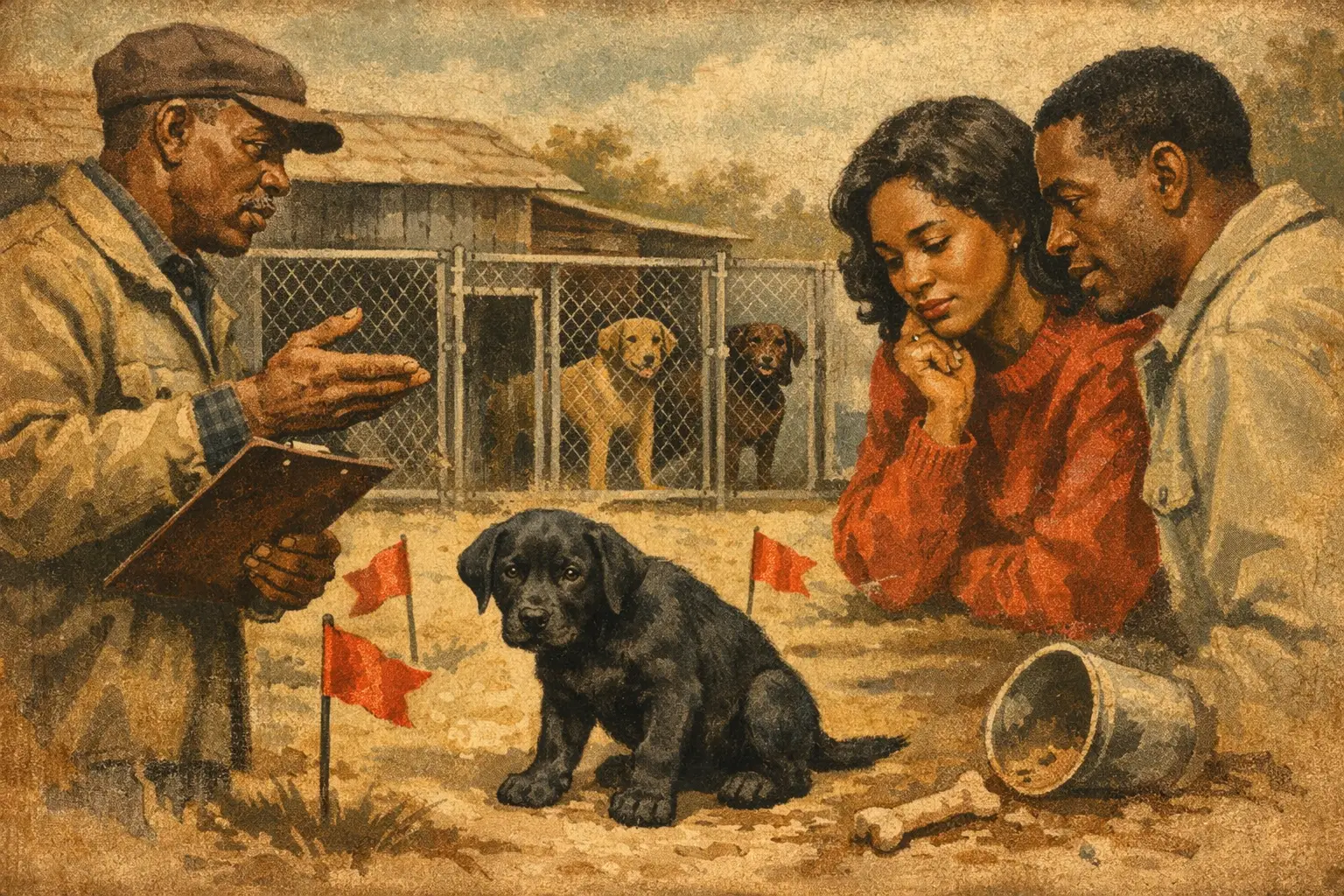
A responsible breeder has an important role in a puppy’s earliest development. During the first weeks, puppies learn from their mother, littermates, daily handling, gentle household activity, and carefully managed new experiences. These early lessons support the stable temperament families and working-dog homes value in a Labrador Retriever.
At Lucky Labs, we believe a well-bred puppy deserves more than a good pedigree. Sound genetics, healthy parents, and a calm, intentional early environment all influence how readily a puppy can learn. Training cannot replace temperament or responsible breeding, but it can help a well-started puppy grow into the companion they are meant to become.
Puppies are especially open to social learning from roughly 3 to 14 weeks of age. This is often called the socialization period. It does not mean a puppy should be overwhelmed with crowds, strange dogs, and nonstop activity. It means positive, controlled exposure matters greatly during this window.
A puppy who gently experiences different surfaces, friendly people, car rides, grooming touches, household sounds, and brief periods of calm separation is learning that the world is manageable. Those lessons can be more valuable at eight or nine weeks than a perfectly straight sit.
What to Teach an 8- to 12-Week-Old Puppy
The first month at home is the right time to begin simple, reward-based training. Keep sessions short – often one to three minutes – and end while your puppy is still engaged. Young Labradors are enthusiastic, curious, and easily distracted. That is normal, not a sign that they are stubborn or incapable.
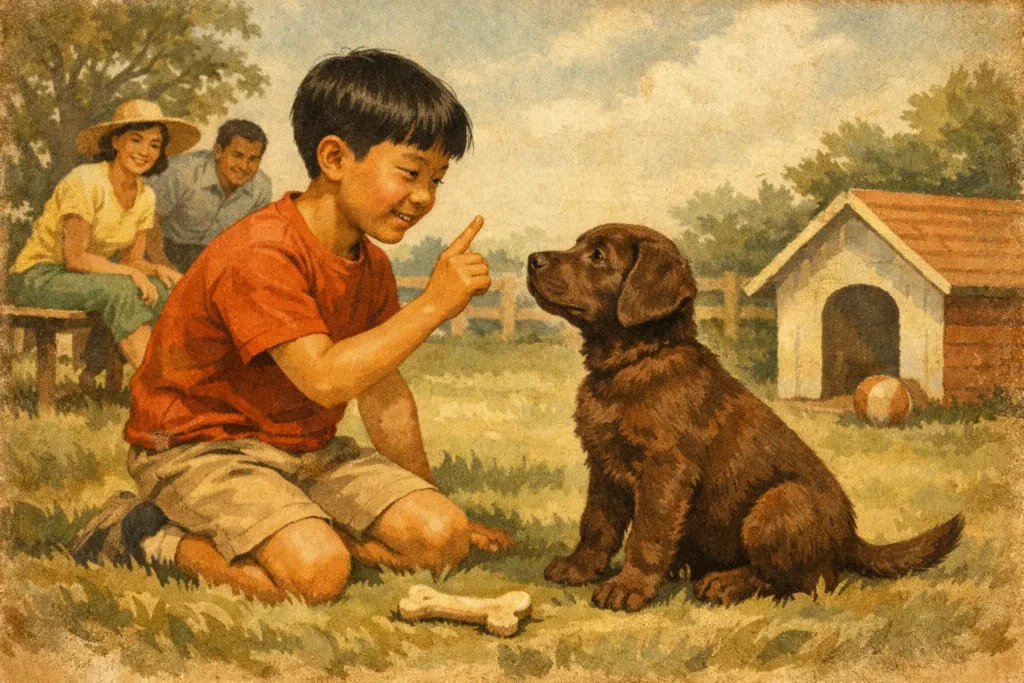
Start with their name and a cheerful recall word. Reward your puppy for looking at you, moving toward you, and choosing to stay close. These small moments create the habit of checking in with their person, which is the foundation for reliable training later.
House training should also begin immediately. Take your puppy outside after waking, eating, drinking, playing, and any exciting activity. Praise calmly when they finish in the right place. Accidents are part of puppyhood, so focus on prevention and consistency rather than correction. A puppy does not understand punishment after an accident, but they do learn quickly from predictable routines.
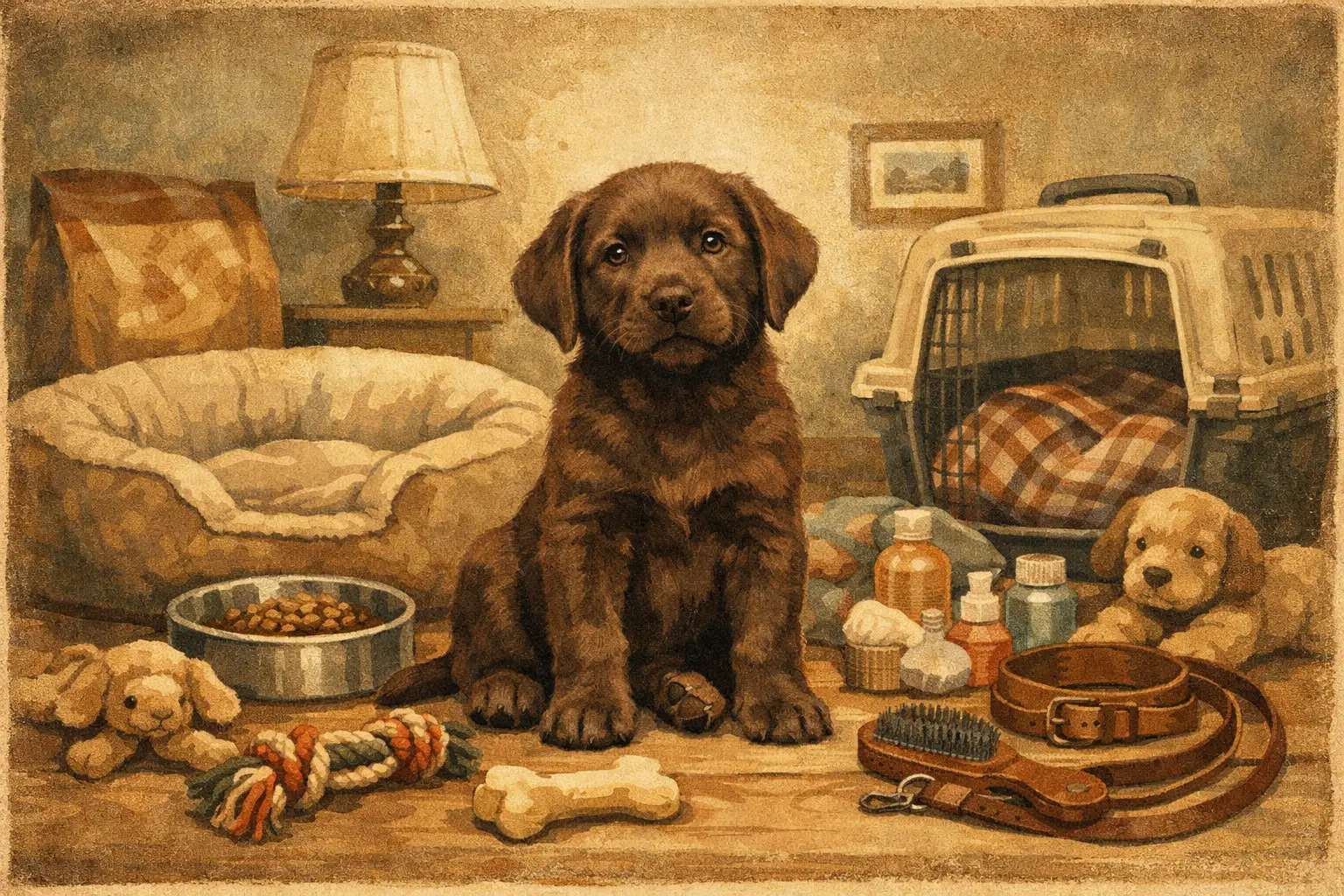
This is also an ideal age to introduce a crate or puppy-safe resting space. The crate should never be used as a penalty. With a soft bed, safe chew, meals, and short peaceful rests, it can become a familiar place where your puppy learns to settle. That ability to rest alone is especially helpful in busy family homes.
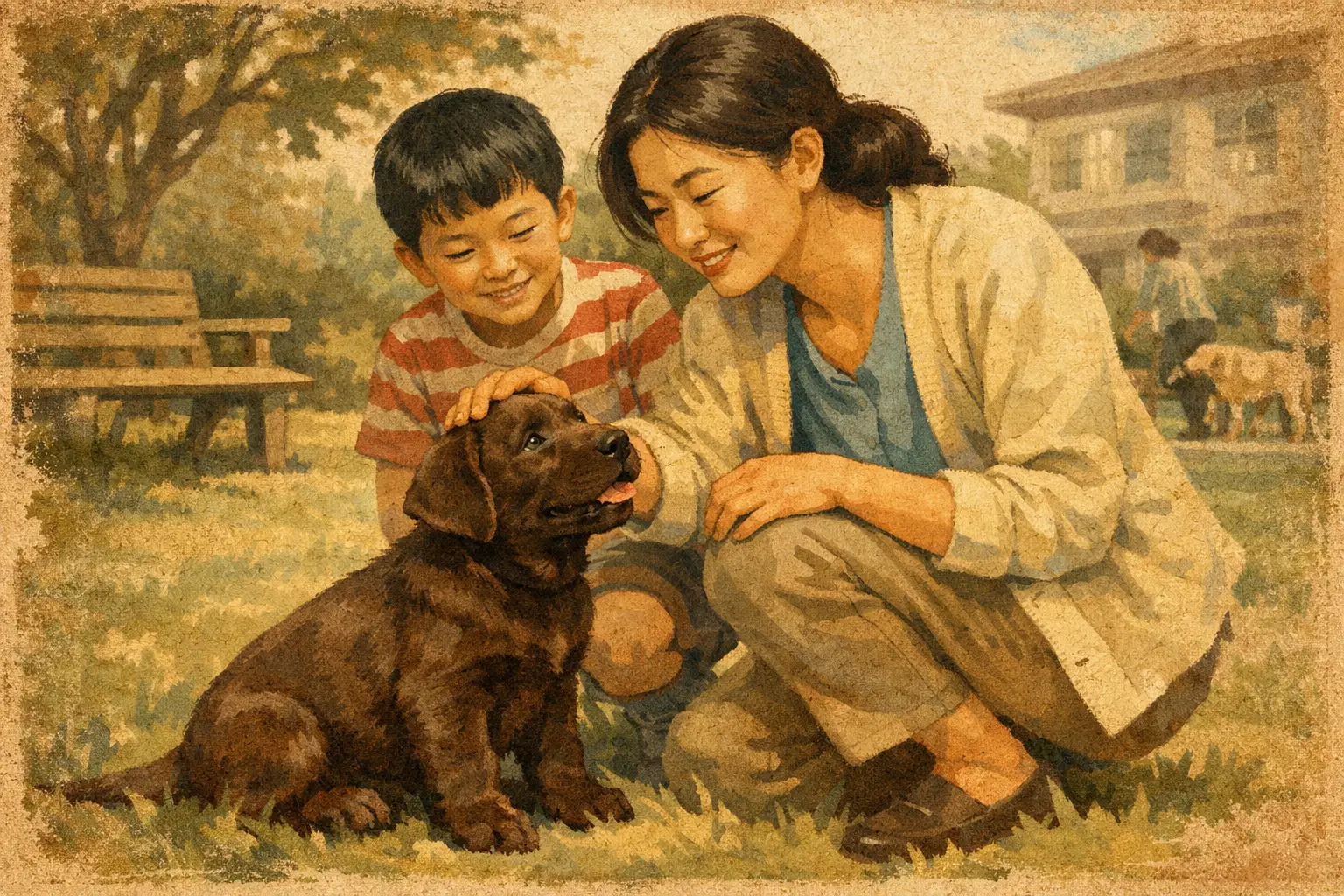
Gentle handling belongs in every early training plan. Briefly touch paws, ears, tail, and mouth while offering treats and praise. A Labrador who is comfortable being handled is easier to groom, examine, and care for throughout life. For puppies who may one day do therapy, comfort, or service-related work, calm handling is a particularly meaningful skill.
Socialization Is Not the Same as Meeting Everyone
New owners sometimes hear that they must socialize their puppy quickly and assume that means taking them everywhere. The better approach is to protect your puppy’s health while introducing the world at a pace they can enjoy.
Before your veterinarian confirms that your puppy is ready for public dog areas, avoid places with unknown vaccination histories, including dog parks, busy pet-store floors, and heavily used dog relief areas. You can still create rich socialization experiences safely. Carry your puppy through a hardware store if permitted, sit in the car near a school pickup line, invite healthy and vaccinated friends over, or let them watch bicycles and traffic from a comfortable distance.
Watch your puppy’s body language. A relaxed puppy may sniff, wag softly, take treats, and recover quickly from a surprise. A worried puppy may freeze, pull away, tuck their tail, yawn repeatedly, or refuse food. If that happens, increase the distance, lower the intensity, and let the puppy regain confidence. Pushing a frightened puppy through an experience can create the very fear you hoped to prevent.
The right lesson is not “you must greet every person and dog.” It is “new things happen, and I can look to my family for calm guidance.”
When to Begin Puppy Classes
Many puppies can start a well-run puppy class after their first vaccinations, with timing guided by their veterinarian and the class provider’s health requirements. The best classes separate young puppies appropriately, clean carefully, use positive reinforcement, and allow puppies to practice calm behavior around one another.
A good class teaches owners as much as puppies. You should come away with practical help for house training, chewing, jumping, leash skills, handling, and common puppy challenges. Look for an instructor who explains how to reward desired behavior rather than relying on fear, harsh corrections, or outdated dominance ideas.
For a Labrador, classes also provide useful practice in settling around distractions. Labs are famously people-oriented and food-motivated, which can make them a joy to train. It can also mean that an excited puppy wants to greet every person in the room. Early lessons in waiting, focusing, and settling help turn that enthusiasm into good manners.
Training at 3 to 6 Months: Build Real-Life Skills
As your puppy grows, increase expectations gradually. This is a strong age for building a loose-leash walk, sit, down, stay, leave it, drop it, and polite greetings. Practice in low-distraction settings first, then add challenge slowly. A puppy who can sit in your quiet kitchen is not automatically ready to sit beside a soccer field.
This is also the age when teething, increased energy, and growing independence can test a family’s patience. Keep appropriate chew options available, manage access to tempting household items, and make sure your puppy has enough rest. An overtired puppy often looks hyperactive or difficult when they simply need a nap.
Use food rewards, toys, praise, and access to things your puppy wants. For example, ask for a brief sit before clipping on the leash, opening the door, or greeting a visitor. This teaches that polite behavior makes good things happen. Over time, those tiny repetitions shape a dog who is easier to live with every day.
Do Not Wait for Bad Habits to Appear
Some families delay training because their puppy is “still a baby.” While patience is essential, waiting can make preventable habits harder to change. A small puppy jumping on guests may seem cute. A 70-pound adolescent Labrador doing the same thing is much harder to manage. The same applies to pulling, counter surfing, demand barking, and ignoring recall.
Early guidance does not mean drilling a puppy for long periods or expecting flawless behavior. It means rewarding the behavior you want before unwanted habits become routine. Consistency from everyone in the home matters more than complicated commands. If one person allows jumping and another does not, the puppy receives mixed information.
Is There Ever a “Too Late” Age for Training?
No. Dogs can learn throughout life, and older puppies or adult Labradors can make remarkable progress with patient, consistent training. Families who adopt an adult dog should not assume they have missed their chance. The process may take more time if a dog has practiced unwanted behavior for months or carries fear from earlier experiences, but improvement is always possible.
Still, the early months offer an opportunity that should not be wasted. They are when routines are easiest to establish and when a puppy is forming lasting impressions of people, places, and daily life. For future therapy, comfort, or service prospects, thoughtful early exposure and reliable foundational skills are especially valuable. A young puppy’s potential must be developed carefully, then evaluated honestly as maturity reveals their true temperament.
The best training plan is one your family can sustain. Keep it kind, clear, and frequent. Celebrate the quiet moments when your Labrador chooses to come close, settle at your feet, or look to you in an unfamiliar situation. Those are the small beginnings of the steady companion you will share your life with.