
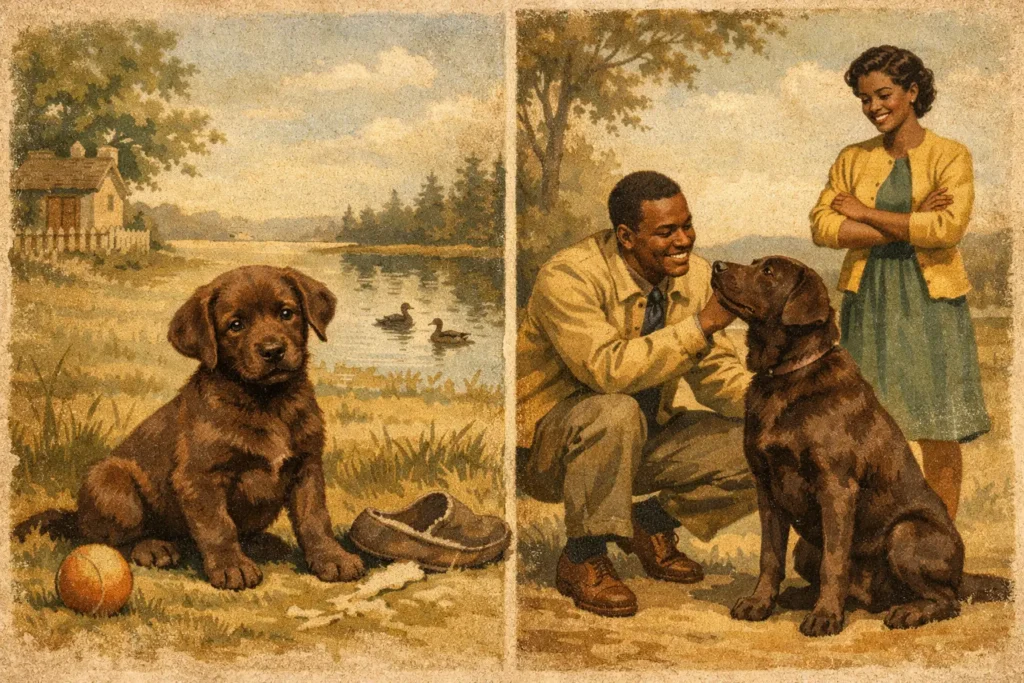
A Labrador can change the rhythm of a home in the best possible way – from the excited greeting at the door to the quiet comfort of a dog resting at your feet. But when families compare a puppy versus trained Labrador, they are often deciding between two very different first-year experiences. Neither choice is automatically better. The right fit depends on your schedule, your household, your experience, and what you need your dog to do beside you.
At Lucky Labs, we believe the conversation should begin with honesty. A Labrador puppy brings joy, possibility, and a chance to shape a dog from the beginning. A trained Labrador can bring more predictability, established manners, and an easier transition into a busy household. Both deserve the same careful breeding foundation, health standards, and lifetime commitment.
What Life With a Labrador Puppy Really Looks Like
A well-bred Labrador puppy is full of promise, but puppies are not finished companions. They are babies learning how to live in a human world. They need frequent potty breaks, close supervision, patient redirection, socialization, and a consistent daily routine. Even a naturally intelligent, people-focused Labrador will need time to understand where to sleep, what is appropriate to chew, how to greet visitors, and when to settle.
For many families, that early work is part of the dream. Children can grow alongside the dog, owners can build training habits from day one, and the family gets to watch a small puppy develop into a confident adult. There is something deeply meaningful about earning a young Labrador’s trust and seeing its personality emerge over time.
Still, a puppy is a serious commitment. The first months can include interrupted sleep, accidents, teething, chewed items, and the occasional moment when a puppy seems to have forgotten every cue it learned the day before. This is normal. It does not mean you chose the wrong puppy or failed at training. It means you are raising a young dog.
A puppy may be the strongest choice if you have flexibility in your day, enjoy active training, and want to be involved in every stage of your Labrador’s development. It can also be a wonderful fit for experienced dog owners who understand that steady guidance matters more than perfection.
The Value of Starting Early
The puppy stage is where good habits begin. Positive exposure to household sounds, calm visitors, car rides, grooming, handling, and age-appropriate new environments can help a Labrador grow into a confident companion. Early training also builds communication between dog and owner.
However, early socialization should never mean overwhelming a puppy. A thoughtful approach is far more valuable than introducing a young dog to every person, dog, and place at once. The goal is a Labrador that feels secure, responsive, and able to recover calmly from new experiences.
Puppy Versus Trained Labrador: The Biggest Difference
The largest difference is not affection. Both puppies and trained dogs can form powerful bonds with their families. The difference is how much day-to-day teaching your household is ready to take on.
A trained Labrador has already had time to develop foundational skills. Depending on the dog’s age and training level, that may include house training, crate comfort, leash manners, basic obedience cues, polite greetings, a recall foundation, and experience settling indoors. For a family juggling work, school, travel, or caregiving responsibilities, those skills can make the transition feel much more manageable.
A trained dog is not a dog that never needs guidance. Every Labrador needs consistency after joining a new home. New surroundings, new people, and new rules require an adjustment period. A dog may know how to walk politely on leash but still need time to understand where the family prefers it to sleep or how visitors enter the house. Training gives you a head start, not a reason to stop participating.
That distinction matters especially for first-time owners. A trained Labrador can reduce the intensity of the puppy stage, but the best results still come from families who are willing to continue the routines that helped the dog succeed.
When a Trained Labrador May Be the Better Fit
A trained Labrador is often a thoughtful option for households that want companionship without the full demands of raising a young puppy. This may include professionals with full workdays, retirees who want a more settled dog, families with very young children, or owners who need a dog with stronger everyday manners from the start.
It can also be a practical choice for someone seeking a dog with potential for comfort, therapy, emotional support, or service-related work. A calm temperament, sound health, and willingness to learn are essential foundations for those paths. Formal service dog work has specific legal, behavioral, and task-training requirements, so no responsible breeder should promise that every dog will qualify. But careful breeding and early development can give the right Labrador a meaningful advantage.
For some people, choosing a trained dog is not about avoiding effort. It is about directing their effort toward bonding, maintaining good behavior, and integrating the dog into an already full life. There is no shame in wanting support during the early stages. Choosing the dog that fits your real routine is an act of responsibility.
Ask What “Trained” Includes
The word trained can mean different things, so buyers should ask clear questions. Is the dog reliably house trained? Has it lived in a home environment? What commands does it know, and in what settings has it practiced them? How does it respond to distractions, children, other dogs, car rides, handling, and unfamiliar people?
It is equally wise to ask how the dog is motivated and corrected. Training should build trust and communication, not fear. A Labrador’s famous eagerness to please can be nurtured through fair structure, repetition, and positive reinforcement.
Health and Temperament Matter in Both Choices
Whether you bring home a puppy or a trained Labrador, the dog’s beginning matters. Training cannot erase poor breeding decisions, and a beautiful pedigree alone does not guarantee a good match. Responsible placement begins with health testing, thoughtful pairings, and a clear understanding of the temperaments behind each litter.
At Lucky Labs, our breeding philosophy is built around producing Labradors with the intelligence, stable temperament, and sound health families depend on. We do not believe in cutting corners with genetics, inbreeding, or buyer screening. Parents and grandparents are health tested, and every placement is approached as a lifelong responsibility rather than a quick transaction.
That foundation is especially important when a family hopes for more than a pet. A Labrador intended to become a dependable family companion, therapy prospect, or comfort dog needs the right combination of confidence, responsiveness, and physical health. Training can strengthen those qualities, but it cannot manufacture them where they do not exist.
Consider Your Household, Not Just Your Wish List
The best choice often becomes clearer when you picture an ordinary Tuesday. Who will take the dog out in the morning? How long will the dog be alone? Are there toddlers, older pets, frequent guests, or stairs to navigate? Is someone prepared to attend training classes and practice each day? Honest answers are more useful than choosing based on what looks easiest or what feels most exciting in the moment.
A puppy may suit a family with time, patience, and enthusiasm for the full journey. A trained Labrador may suit a household that needs a smoother start and appreciates established routines. In either case, plan for exercise, mental enrichment, veterinary care, quality nutrition, grooming, and daily connection. Labradors are social dogs. They do best when they are included in family life rather than treated as backyard pets.
Budget deserves an honest look as well. A puppy may have a lower initial training level but require classes, supplies, and more time at home. A trained dog may have a higher upfront cost because of the professional time and care invested before placement. The meaningful comparison is not just price. It is the support, preparation, and long-term fit behind that price.
The Right Labrador Should Feel Like a Match
The goal is not to find the easiest dog. It is to find the dog whose needs your family can meet with confidence and consistency. A puppy can be a beautiful beginning for the right home. A trained Labrador can offer a steadier path for a family ready to welcome a dog that already understands the basics.
Choose with your real life in mind, ask direct questions about breeding and training, and give yourself permission to value support. The Labrador who belongs with you is the one you can care for fully, guide kindly, and love for every stage ahead.