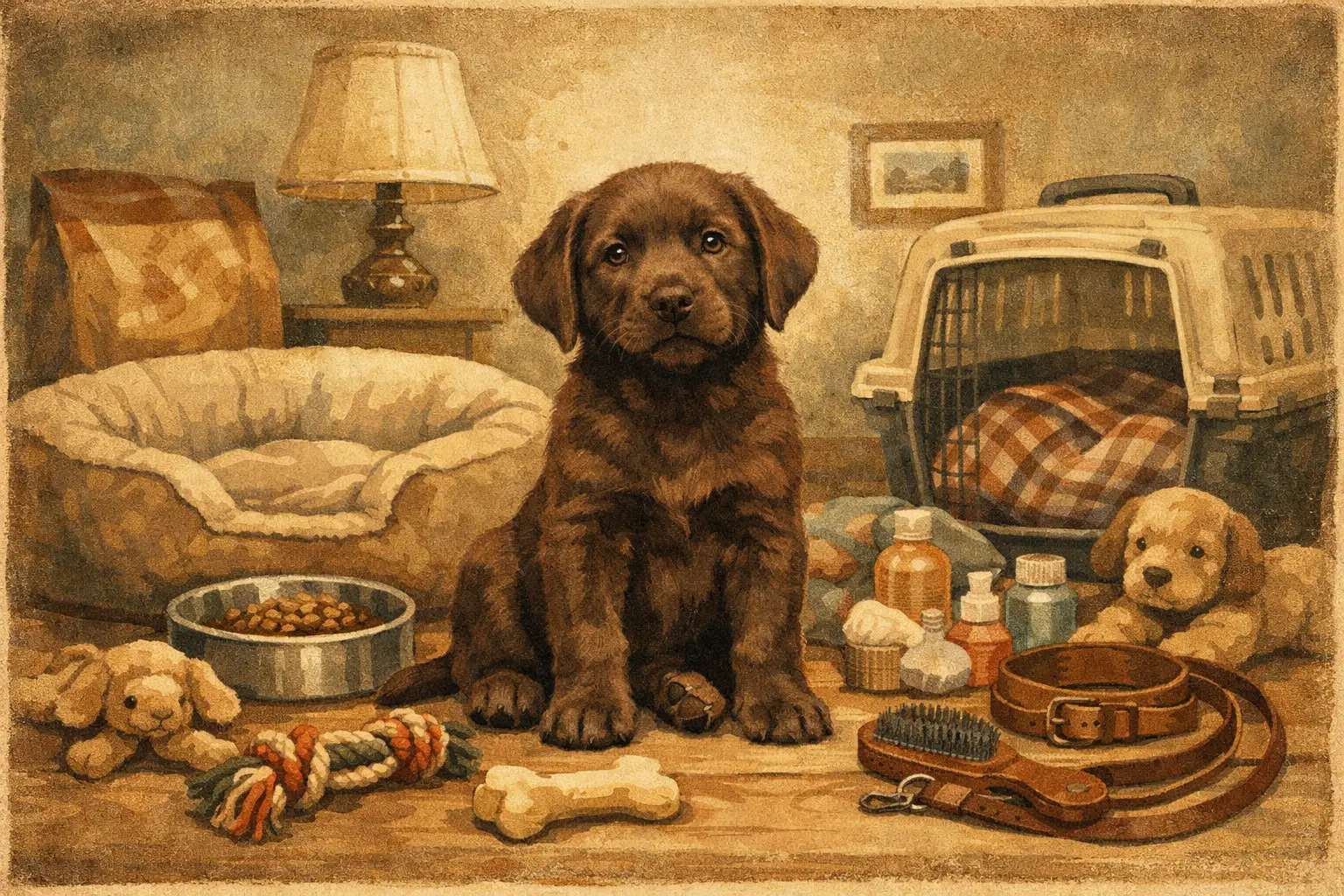
The first night with a Labrador puppy can test even the most excited new owner. Labs are affectionate, people-focused, and quick to bond, which is wonderful until bedtime arrives and your puppy decides being alone for ten minutes is completely unacceptable. If you are wondering how to crate train lab puppy without creating fear, the answer is simple: go slower than you think, stay consistent, and treat the crate as a safe place, not a punishment.
Labrador puppies usually respond very well to crate training because they are intelligent, routine-oriented, and eager to please. But that does not mean every Lab takes to it instantly. Some settle within a day or two. Others protest, especially if they have just left their littermates and are adjusting to a brand-new home. What matters most is the pattern you create in those early days.
Why crate training matters for a Labrador puppy
A crate is not about control for the sake of control. It is a tool that helps your puppy learn how to rest, how to self-soothe, and how to stay safe when you cannot supervise every second. With a breed as active and curious as the Labrador Retriever, that matters.
Crate training also supports potty training because most puppies naturally avoid soiling the place where they sleep. Used correctly, the crate teaches bladder control in age-appropriate steps. It can also prevent bad habits from getting started, like chewing furniture, chasing children when overstimulated, or roaming the house looking for mischief.
For many families, crate training becomes even more valuable once life gets busy. A puppy who can relax in a crate during short errands, recovery after vet visits, or travel is usually less stressed than a puppy who has never learned that skill.
How to crate train lab puppy without causing stress
Start with the right crate setup. Your Lab puppy needs enough room to stand up, turn around, and lie down comfortably, but not so much space that one end becomes a bathroom. If the crate is too large, house training often takes longer. Many owners use a divider so the crate can grow with the puppy.
Place the crate in a part of the home where your family spends time. A Labrador puppy does best when he feels included, not isolated. During the day, that may be your kitchen or living area. At night, many families have the best results with the crate beside the bed for the first week or two. That close presence often reduces panic and helps the puppy settle faster.
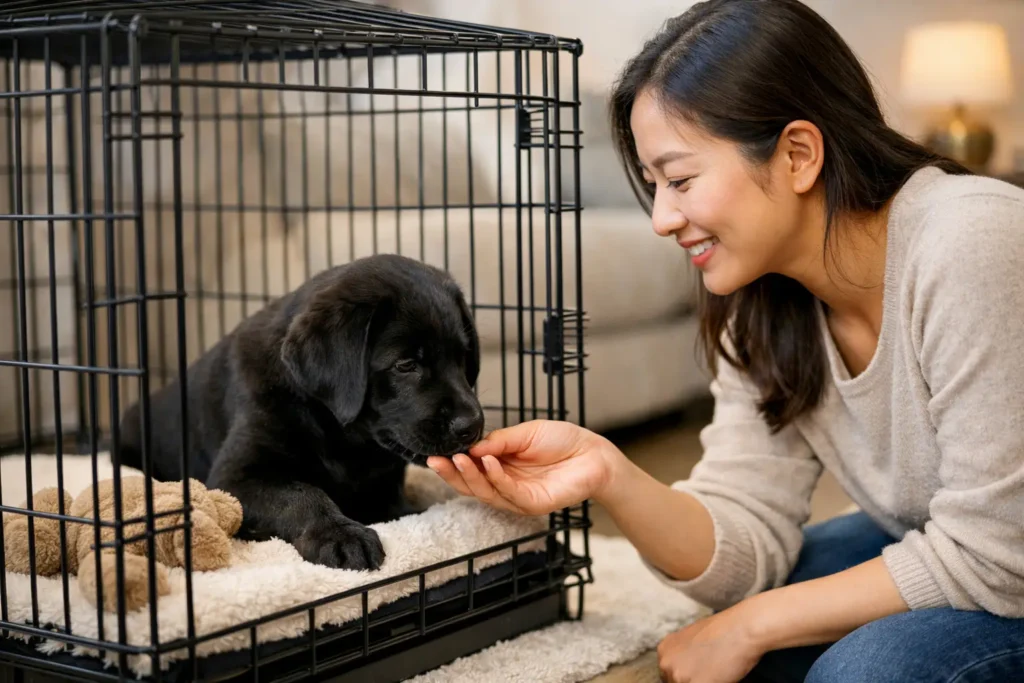
Keep the inside simple. A safe crate mat or bedding is fine if your puppy does not chew it. Add a few durable puppy-safe toys, but do not overfill the space. The goal is calm comfort, not entertainment overload.
Then begin with short, positive introductions. Leave the crate door open and let your puppy explore at his own pace. Toss a few pieces of kibble inside. Feed meals near the crate, then just inside the crate, then farther in as confidence grows. Praise calmly when your puppy steps in. At this stage, you are building association, not asking for duration.
Once your puppy is comfortable entering the crate, close the door for a minute or two while you stay nearby. Open it before panic starts. That timing matters. If every crate session ends only after barking escalates, your puppy may learn that noise is the way out.
The first week sets the tone
The biggest mistake most families make is expecting too much, too fast. A young Labrador puppy may be confident, but he is still a baby. If he has just come home, he is learning your scent, your routine, your voices, and the feel of sleeping without his litter. It is reasonable for him to need support.
During the first week, think in short repetitions. Crate your puppy after play, after potty breaks, and after meals when he is naturally tired. Those sleepy windows give you the best chance of success. A puppy with energy to burn is far more likely to protest.
Use a calm cue each time, such as “crate” or “bed.” Say it once, guide him in with a treat, and keep your tone steady. Labs are sensitive to human emotion. If you sound worried or guilty, many puppies become more unsettled.
At night, expect at least one or two potty trips depending on age. Very young puppies cannot hold it for long stretches. If your puppy wakes and cries in the middle of the night, pause for a moment to see whether he settles. If the crying continues, take him out quietly for a potty break with no play and very little talking. Then return him to the crate.
What to do when your Lab puppy cries in the crate
Some whining is normal. Your puppy is adjusting. The question is whether the crying is brief frustration or real distress.
Brief whining that fades after a few minutes is usually part of the learning process. If your puppy has recently pottied, has had enough exercise, and is not too hot or too cold, give him a chance to settle. If you rush in every time he makes a sound, you can accidentally teach dependence.
Distress looks different. If your puppy is screaming, biting the crate, drooling heavily, or working himself into a panic, back up a step. That puppy likely needs shorter sessions, more positive crate games, and a slower build. Confidence cannot be rushed.
This is where temperament matters. Well-bred Labradors are generally biddable and people-oriented, but each puppy is still an individual. Some are naturally more independent. Others are softer and need more reassurance. Good crate training respects the puppy in front of you instead of forcing every dog into the same timeline.
A daily rhythm works better than random practice
Crate training improves when it becomes part of a predictable day. Labradors thrive on routine. When your puppy learns that potty break, meal, play, rest, and family time happen in a regular pattern, the crate starts to make sense.
A young puppy is usually awake for short bursts and then ready for sleep again. That creates natural opportunities for crate naps. If your Lab turns wild, mouthy, or unable to focus, he may not need more stimulation. He may need a nap.
Aim for many calm, short crate sessions throughout the day rather than one long session that pushes him too far. As your puppy matures and proves reliable, you can gradually lengthen the time.
Common crate training mistakes
Using the crate after your puppy has already reached a frantic state often backfires. So does putting him in only when you leave the house. If the crate predicts isolation every time, your puppy may resist it. Balance alone-time practice with crate time while you are home and nearby.
Another mistake is too much freedom too soon. Labrador puppies are charming, but they are also busy and impulsive. If your puppy has hours of loose access to the house before he understands where to rest, where to potty, and what to chew, setbacks are common.
Finally, do not use the crate as punishment. If your puppy nips, steals a sock, or gets overexcited, the answer is redirection and training, not sending him to the crate in anger. The crate should remain emotionally safe.
When crate training may need adjustment
If your puppy consistently soils the crate, cries intensely despite gradual training, or cannot settle at all, look at the full picture. The crate size may be wrong. The puppy may be getting too little exercise or too much stimulation. Feeding and potty timing may be off. Occasionally, digestive upset or a medical issue can be part of the problem.
Some families also expect a very young puppy to handle workday-length crating, which is not realistic. Puppies need bathroom breaks, movement, and human interaction. Crate training is part of a healthy routine, not a substitute for care.
At Lucky Labs, we have seen how much easier early training becomes when a puppy comes from thoughtful breeding, strong early handling, and a consistent start. Good instincts help, but good structure matters just as much.
When can your Lab puppy be trusted outside the crate?
That depends on age, maturity, and habits, not just size. Many Labrador puppies look grown long before they make reliable choices. Teething, adolescence, and bursts of energy can all affect behavior.
Start by giving freedom in small stages. If your puppy can nap in the crate, stay clean, and settle well, begin with one puppy-proofed room while you supervise. Over time, trust is earned through repetition.
Crate training is not about keeping your Labrador confined forever. It is about giving him a dependable place to rest while he learns how to live successfully in your home. Done with patience and care, the crate becomes less of a training tool and more of a quiet place your puppy knows is his. That kind of security is a gift, especially for a breed that wants so much to be close to its people.